Arise Queen Aethelflaed


Today marks the day when the wonderful sculpture by artist Luke Perry was unveiled in Tamworth. It’s been a long journey through the stages of artwork commission, through to design, fabrication, galvanization and erection, but Queen Aethelflaed, ‘Lady of the Mercians’ is finally on display, for all to see on the Offa Drive/Saxon Drive roundabout outside Tamworth Railway Station.
Colleagues at Joseph Ash was invited along to the unveiling as a Joseph Ash Galvanizing representative, as our Telford plant proudly galvanized the steel for Luke Perry.
It was a great event. Members of the public, Luke Perry and his family, as well as the Mayor of Tamworth were there to join in the celebrations.
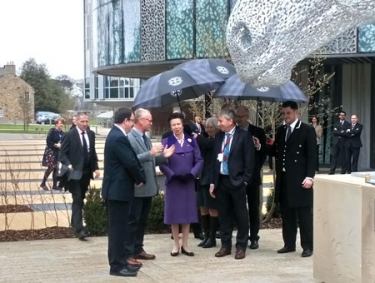
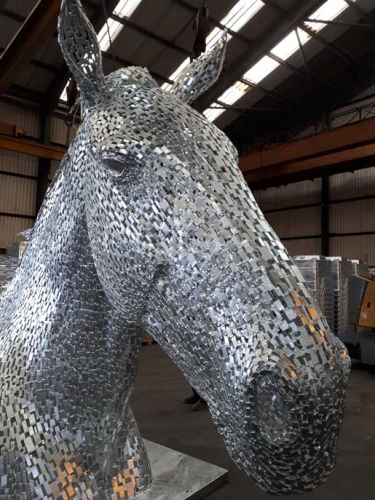
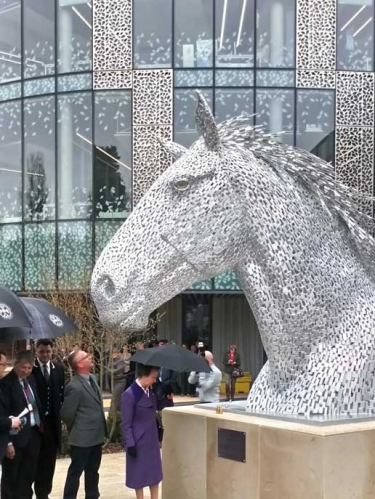
Yesterday was a special day at the Royal (Dick) School of Veterinary Studies of the University of Edinburgh, with two great occasions taking place: 1) Andy Scott’s latest sculpture was unveiled, and (2) HRH The Princess Royal unveiled the stunning work of art. It also felt like a special day for the team at Joseph Ash Galvanizing, as our Telford plant was privileged enough to be asked by Andy Scott to galvanize the steel, and it’s wonderful to see the sculpture in its final destination.
Andy Scott’s latest sculpture is called ‘Canter’. Equine in nature, it depicts a heavy draft horse, reflecting the heritage of the Vet School, which was originally set up to help working horses. The School commissioned the sculpture as a permanent work of art, to be placed outside their new faculty building at their Easter Bush Campus, after previously exhibiting small scale versions of Andy’s famous Kelpies sculptures.
Andy Scott said: “I chose a heavy horse to reflect the original intent of the school, which was set up to help workhorses in the early 19th century.
“I am delighted with how it fits into the environment, blending with the unique architectural features of the building and the stone plinth.” (Source: bordertelegraph.com)
The sculpture – which took 10 months to make – is made from welded steel flat bar, of varying thicknesses and widths, weighing in at about 1.5 tonnes, at a height of 15ft.
Joseph Ash galvanized the sculpture at our Telford plant, by carefully dipping the complete sculpture into a bath of hot molten zinc, to provide the steel with a coating that not only looks aesthetically pleasing but will also protect the steel from the elements (thereby preventing rust and corrosion) over the course of the next 25+ years.
You can see a photo of the sculpture in the yard at the Joseph Ash Telford plant – just after it had been galvanized – to the right. You can also see two photos of ‘Canter’ and HRH The Princess Royal at the unveiling yesterday. Visit our Facebook, Twitter and Flickr pages to see more photos. (‘Unveiling’ photos by Pete Reid.)
Mick Jackson, IT and Marketing Manager at Joseph Ash Galvanizing said: “We recently asked Andy what first inspired him to sculpt horses, and he told us that he had won a commission to sculpt a large Clydesdale horse way back in 1998 and he became hooked from then on. As we’ve been asked to galvanize many sculptures by Andy over the years, and it’s great to see the final art in situ, we think we’ve become hooked as well! It’s always a pleasure to assist Andy in protecting his sculptures so that they can be enjoyed by people many years into the future.”
To see more of Andy’s work, visit his website.
To see/read about more of the sculptures we have galvanized for Andy, click here.


In October 2017 the new Mersey Gateway Bridge opened across the River Mersey. Working as a trusted supplier to Cenpart – a protection and security engineering company based in the Midlands – Joseph Ash Galvanizing was proud to provide the steel protection.
The Mersey Gateway Bridge was part of the Mersey Gateway Project, commissioned by Merseylink who have the responsibility for the design, build, finance, operation and maintenance of the new bridge and associated road infrastructure over a 30-year period.
This was a major civil engineering scheme to build a new six-lane cable-stayed toll bridge, and a 9-kilometre road network connecting the new bridge to the main motorway network in the North West of England.
The new bridge is over 2.3km long with a river span of 1km. It is made from reinforced concrete, and the spans are supported by steel cable stays, attached to pylons. The bridge also features an important wind deflection barrier on both sides.
The importance of the wind barrier
Due to the large span of the bridge and its exposed nature, at the design stage there were concerns about the effect of high winds on crossing vehicles, particularly high-sided ones. The wind deflection barrier was designed to withstand a once in 50-year wind event (based on historical data) and protect the crossing vehicles. Due to local prevailing winds the barrier was designed to be higher on one side (4m) than the other (2.5m), as it would be more susceptible to higher winds from that side.
Involved at an early stage in the design process, Cenpart was commissioned to fabricate the support posts and clamping brackets, that carry the C shaped Perspex horizontal members to form the important wind deflection barriers.
Neil Callow, Managing Director at Cenpart said: “Cenpart was chosen by Merseylink as we have the necessary EN 1090 certification and execution class to undertake the work. We also had the capability to produce the volumes of galvanized steel required to meet looming deadlines, which were compressed due to delays in the order being placed.”
The importance of galvanization
Hot dip galvanizing has been used worldwide for well over a century because it provides a long-life, low-maintenance corrosion protection which safeguards steel from atmospheric attack. This is incredibly important in huge scale engineering projects that need to provide safety standards for the public, as well as longevity for the structure being built.
Cenpart chose Joseph Ash’s Walsall plant to galvanize the steel.
Steel tonnage
A huge amount of steel was needed for the project. The 4m high posts were made from 20mm thick steel, and the 2.5m high posts were made from 10mm thick steel. A total of 1370 posts and 10750 clamping brackets weighed in at 250 tonnes of steel, with over 37km of welding.
Joseph Ash Walsall collected the steel from Cenpart’s grit blasters. The posts required grit blasting to SA 2.5 standard as the specification for hot dip galvanizing called for a 140 micron nominal thickness coating. This was easily achieved and Joseph Ash’s quality department recorded average pick up thickness throughout the contract to confirm the specification was met.
The 11000 loose clamping brackets were also spun galvanised by Joseph Ash Telford.
After the steel was treated, Joseph Ash Walsall delivered it to Cenpart’s painters for an application of a multi coat marine grade paint system.
The finished project
The Mersey Gateway Project has provided huge benefits to the North West. Not only does it now connect the towns of Runcorn and Widnes and relieves the congestion on the old Silver Jubilee Bridge, but it also employed over 1,000 people and issued contracts to companies in the North West totalling £129 million.
Joseph Ash Galvanizing and Cenpart were both proud to be involved in such a huge scale engineering project.
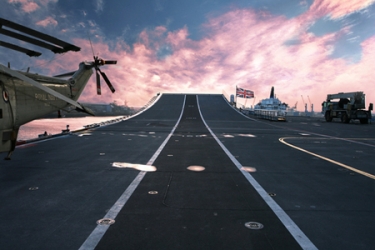
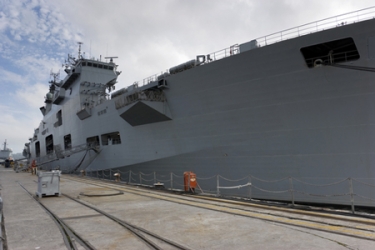
On 7 December 2017, after months of sea trials, HMS Queen Elizabeth was commissioned. This is one of two new aircraft carriers for the UK – alongside the HMS Prince of Wales – collectively known as the Queen Elizabeth Class Carriers.
Over 10,000 people from a range of SME’s across the UK helped to build the ships, and we’re proud to say that Joseph Ash Telford, as a supplier to our client Abbot & Co, have played a part.
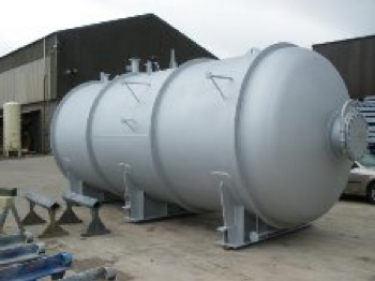
Abbot & Co was founded in 1870 in Newark, Nottinghamshire. It has 40 members of staff, and a long tradition of supplying the Ministry of Defence with air receivers and specially designed and fabricated pressure vessels.
Pressure vessels are used for diesel engine starting, diesel pumping and radar cooling.
Joseph Ash Galvanizing has been a longstanding supplier to Abbot & Co, with our Telford plant regularly galvanizing the pressure vessels and air receivers which they fabricate.
Henry Price, Managing Director of Abbot & Co, was proud to be involved in the new aircraft carrier project. He said: “There’s a huge sense of pride that our company is involved in such a prestigious project. It’s great to have local people from Newark working on a national project such as this, there’s a real sense of comradery. It’s also brilliant for manufacturing in the UK to have young people involved in a project such as this as it helps show British industry at its best.”
The two new aircraft carriers each weigh 65,000 tonnes, and are 280 metre’s in length. They can carry up to 250 Royal Marines, a complement of 679 personnel, and 40 aircraft including F-35B Lightning II fighter jets, Chinook helicopters, Apache AH64 helicopters, Merlin HM2 and HC4s, and Wildcat AH1 and HMA2’s.
The Marketing Manager at Joseph Ash Galvanizing said:
“In 2015/16 the MOD invested over £1.5bn in the Midlands, supporting over 10,000 full-time jobs. This has been a boon to the local economy and local communities. It’s also been wonderful to see that one of our valued clients – Abbot & Co – have been one of the 700 British SMEs to support the build of these aircraft carriers. We’re also thankful to Abbot & Co for trusting us to galvanize the pressure vessels for the ships. We have been a supplier to Abbot & Co for years. It feels good to know that we can collectively play a small part in protecting our nation’s future security.”
HMS Queen Elizabeth has some further sea trials to undergo, and HMS Prince of Wales needs to be completed before it starts sea trials in 2019. Both ships are expected to be fully operational by 2020.
Joseph Ash Chesterfield completes the galvanization of a second storey Mercedes Car Park in Stevenage.
Working in partnership with Topdeck Parking – a trading division of Joseph Ash Galvanizing’s parent company Hill & Smith PLC – Joseph Ash Chesterfield has successfully galvanized over 400 tonnes of steelwork for Topdeck’s first second storey extension to an existing car park. (Which doubles the existing storage space.)
About Topdeck Parking
Topdeck specialise in quick build assembly for their clients, which maximises the use of valuable car parking space. This contract was the first second storey extension that they had undertaken after the initial car park was designed, built and installed by Topdeck several years ago. To date they have built several high-profile parking facilities for customers who consider the time taken to install these car parks to be their highest priority, as valuable customers and revenue can be lost during extended build times.
The second storey extension
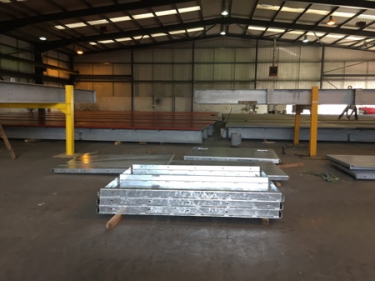
The project involved galvanizing very long 16m beams and wide plate flooring, and Joseph Ash Galvanizing’s Chesterfield plant was chosen as the perfect location, as the plant can handle the largest of projects.
Joseph Ash Chesterfield is also unique in being able to offer both an assembly and trial erection facility, which reduces major transport costs and secondary storage costs at another location before installation.
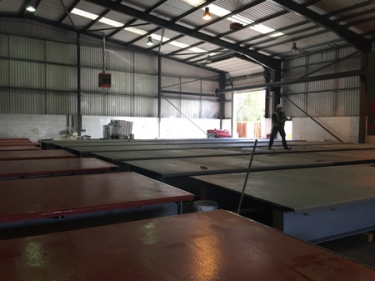
The galvanization of the beams and plate flooring took four weeks, although most of the work was completed within the first 48 hours of arriving at Chesterfield. Topdeck then assembled all the long beams and plate flooring in the covered facility at the Chesterfield plant, which includes heat, light, power and a crane to assist in the assembly and movement of the large completed units.
Once assembly was complete, the 16m long by 2.4m wide units were coated and treated to the customer’s exact expectations. This ensured no wet trades were needed on site, and all the work could be carried out within the ideal conditions for painting.
Joseph Ash Chesterfield’s Commercial Manager stated “Having worked with Topdeck and Berry Systems previously we knew the exacting requirements that would be required of our plant, to complete the project to the end client’s satisfaction. Joseph Ash Chesterfield is unique in not only being able to dip the longer length 16m beams, but we also have the added benefit of large undercover assembly areas and storage facilities. This enabled Topdeck to install the project in a greatly reduced timescale as opposed to a traditional build scheme. The modular build carpark concept has proved very popular and hopefully at Chesterfield we will be in an excellent position to assist Topdeck on future ventures, after receiving high praise from the Topdeck team for our outstanding efforts.”
For more information about Topdeck, please contact Iain Smith on 01902 491100.
For more information about galvanizing large projects, such as carparks, please contact Joseph Ash Chesterfield on 01246 854650.


The city of Aberdeen has a coat of arms that contains three towers, the fleurs-de-lis, and two majestic leopards. It also has a touch rugby club called The Leopards, as well as a university magazine titled ‘The Leopard’. So, when a new development called Marischal Square was built in Aberdeen city centre, it was fitting that it should house a beautiful Andy Scott sculpture of the majestic cat, called ‘Poised’.
The sculpture is a stunning work of art by the renowned Kelpies artist, and the team at Joseph Ash Galvanizing’s Telford plant were pleased to be involved in protecting its steel and preserving it for many years to come.
Marischal Square is a new £107 million development at the east end of Union Street in the heart of Aberdeen. The development – which provides 173,500 sq ft of Grade ‘A’ office space with secure parking, a mixture of granite and glass in the elevations – comprises offices, restaurants, bars, a hotel, shops and café bars, and is a welcome boon to the City.
The development partners for Marischal Square are Muse Developments and Aviva Investors, and as part of the project, they commissioned Andy Scott, to make a centrepiece for the buildings, to be inspired by the leopard symbols on Aberdeen City Council’s historic coat of arms.
Scott works in steel and bronze, combining figurative and equine themes with contemporary techniques to create stunning landmark artworks in a range of locations across the world including New York, Sydney and Chicago, as well as Glasgow, Falkirk, Cumbernauld, Leeds and Belfast in the UK.
He said: “I’ve worked on this sculpture for over a year in the studio and it’s been very demanding. There are literally thousands of steel fragments, all individually welded to create the form of the artwork. It now stands five metres tall, weighs just over two tonnes, and will sit proudly atop a ten metre high steel column. I hope it brings a real presence and sense of drama to the atrium space of Marischal Square.”
Andy Scott and Joseph Ash Galvanizing
As part of the leopard’s fabrication, Scott chose Joseph Ash Galvanizing’s Telford plant to protect the steel with a galvanized coating. Galvanizing is important for a sculpture such as this, as the zinc coating will protect the steel for many years to come from rust. It also provides a beautiful finish to the metal.
Joseph Ash Telford was the best choice for treating the steel as the plant has one of the widest galvanizing baths in the UK. This was an important factor as the sculpture is so large and weighs in at 2.2 tonnes.
Scott is also used to the excellent quality of galvanizing provided by Joseph Ash Galvanizing as we have treated a number of his sculptures before, ranging from ‘Propella’ in Kent, to a series of steel horses called Herd IV for a private estate in Long Island, USA.
Andy Scott and Muse Developments
Muse Developments’ Director, Scotland, Stephen Turner, said the decision to work with Andy Scott was a significant moment for everyone involved in the Marischal Square project.
“If you look at Andy’s work and history and the massive impact made by The Kelpies in Falkirk, you can see why we are all delighted to work with him on a project which we believe will be huge for the development and the city,” he added.
“The new artwork fits right into the project partners’ ambitions to ensure that Marischal Square not only works for the business community in Aberdeen, but also draws people into the city centre area and extends the economic benefit delivered by the development.”
Aberdeen City Council
Aberdeen City Council City Centre Masterplan Lead Councillor Marie Boulton said: “At the outset of the Marischal Square project, we identified that public art would play a vital role in attracting both business and visitors to the prestigious new development, so it’s fantastic not only we have this art, but it’s also an amazing sculpture by Andy Scott.
“Andy’s work around Scotland is so well known and so it’s brilliant that his first major work in Aberdeen is here at Marischal Square and will be open to the public.
“His sculpture of a leopard is extremely impressive and is very appropriate for Aberdeen as leopards are a symbol of the city, featuring in our coat of arms after legend says they were bestowed as a gift by King James I for underwriting his expenses while he was held captive in England.
“We look forward to this contemporary new leopard in Aberdeen being enjoyed by residents and visitors in our beautiful city.”
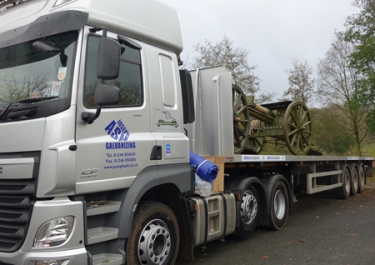
Over the last year we have published a few articles about the Passchendaele Salute 2017. In case you’ve missed these articles, Joseph Ash Galvanizing has donated the use of some of its trucks for a number of days, to carry Great War field artillery from the Midlands to France, to take part in the Salute. (You can read the full story here.)
The Passchendaele Salute takes place on 10 November, and in preparation for the event, the trucks and the Great War guns have already started their long journey. They travelled from Hereford to Kent yesterday, where they are stayed overnight, before crossing the English Channel today.
To chart the journey of the artillery and the Joseph Ash Galvanizing trucks, click onto our photo diary on Flickr. We’ll update it with new photos each day.


Joseph Ash Medway provided hot dip galvanizing and powder coating for BH Engineering’s unique signpost panels at Folkestone Warren nature reserve.
Protecting the Folkestone Warren tourist sign from corrosion
The White Cliff Countryside Partnership (WCCP) engaged BH Engineering Ltd in Deal, Kent, to fabricate a series of signpost panels to be situated amongst the Warren, highlighting points of interest for visitors to the trails. The project was funded by the Heritage Lottery Fund.
Bob Hogben, who runs BH Engineering Ltd was happy to take on the project and he set about designing and fabricating 10 steel panels in close collaboration with Kirk Alexander of WCCP, which he then sent to Joseph Ash Medway for hot dip galvanizing and powder coating.
As part of the design, Bob wanted to depict the kinds of things that visitors to the Warren would see along the way such as wildlife, cattle, fossils, Roman ruins and the Martello Towers. His overall scheme included 10 separate panels each with different designs. As the panels were very detailed, and very large (3.1m high by 1.35m in width), it was a Summer-long project for BH Engineering Ltd.
Once fabricated, the panels were sent to Joseph Ash Medway for galvanizing and powder coating. Because the steel panels would be displayed outside as part of the nature at Folkestone Warren, they needed to be protected from atmospheric corrosion, come rain or shine. The duplex coating achieved from the process ensured the sign remained resistant to corrosion for decades.
At the end of the Summer, the panels were finished and were erected at various points along the trails at Folkestone Warren. Artwork for inside the panels was designed and produced by Arc Creative Design Ltd of Folkestone. Visitors to the nature reserve can now see them, and use the information contained within to find out about specific points of interest along the route.
Bob Hogben said: “The panels were a labour of love this year. Folkestone Warren is an area of outstanding natural beauty and it was a privilege to be asked to create signposts that have now become part of the beautiful landscape.”
The Sales Manager at Joseph Ash Medway commented: “Folkestone Warren is relatively close to our Joseph Ash Galvanizing plant in Kent, so it was also an honour when BH Engineering asked us to work on this project. We’ve visited the panels since they were treated at our plant, and it’s wonderful to see them at their final destination.”

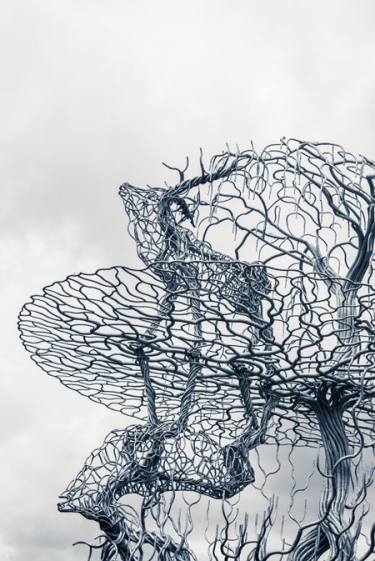
A stunning new piece of artwork has recently been unveiled in Chelmsford, Essex; Matthew Lane Sanderson is the artist, and the sculpture was hot dip galvanized by Joseph Ash Telford, protecting it from corrosion for decades to come.
Sanderson’s sculpture at Beaulieu
A new housing development has been built in Essex, in an area just north of Chelmsford. The development is called ‘Beaulieu’ and it will eventually include over 3600 new homes, playgrounds, a railway station, commercial areas, and parkland.
The development has been built by Countryside and L&Q, who also wanted to include sculptural and functional works of art in the landscape to tell the story of the land’s previous Tudor owner, King Henry VIII, who had a palace and a deer park there.
The development partners chose a series of talented artists, and Matthew Lane Sanderson – a ‘Big-Art’ sculptor from Herefordshire – was commissioned to create one of the pieces of art.
For the commission at Beaulieu, Sanderson created a spherical sculpture, with an intricate design, that depicts a regal reflection of a stag under a tree, set on a reflected crown base. The statue is made from six tonnes of steel and zinc and is ten metres high. The artist has also inscribed a poem into the base which reads as follows:
“All things held in one small globe,
Spinning eternal in endless strobe.
Plants, water, animals, light.
Future, past, day, night.
All is balanced on everyone’s crown,
In every country, in every town.”
The sculpture has a special place in the Beaulieu development as it stands proud at the entrance to the new housing estate/town.
Sanderson said of the sculpture: “This work of art shall forever mark the status of this place both past, present and future. It is a symbol that not only conveys the beauty of natural form, but the hope we all share for balance in all things.”
Joseph Ash Galvanizing and Matthew Lane Sanderson
Sanderson is well-known to Joseph Ash Galvanizing as he regularly asks us to protect the finished sculptures with a galvanized finish. A galvanized coating on steel protects the metal from rust and enables it to be protected from the elements for many years to come.
Sanderson has previously asked Joseph Ash Galvanizing to hot dip galvanize works of art including ‘Conduct’ at Solihull School.
He has been consistently pleased with the professional service and level of quality that Joseph Ash provides, and therefore asked one of our plants to galvanize the sculpture for Beaulieu.
The marketing manager at Joseph Ash commented: “It is always an honour for Joseph Ash Galvanizing to be asked to treat huge works of steel art, by amazing artists such as Matthew Lane Sanderson. Hours and hours of work go into the design and creation of these sculptures and it is imperative that our galvanizing plants do justice for the artists, by providing the best quality galvanized finish that we can.”


Model Spitfires fabricated from steel to celebrate an icon of the skies during WW2, and a grandfather’s legacy.
In just a few weeks’ time, on 3 September, Great Britain will be remembering the day 78 years ago when Neville Chamberlain declared war on Germany and the start of WW2. It was a sad day for the nation, but especially for those who had already lived through the horrors of WW1, which had finished only two decades earlier. Much had changed in terms of military might in 21 years however, including the development of the Spitfire, a “masterpiece of aerodynamic engineering”* and an icon of the skies, especially during the Battle of Britain (July – October 1940).
To celebrate the hard work and success of the Spitfire, and to commemorate RAF airmen and a grandfather’s legacy, an engineering company in Northumberland – Lutman Aero Works – began to fabricate custom built Lutman Spitfire MK XII’s in 2016 as sculptural steel commissions.
Joseph Ash Galvanizing has been proud to provide the galvanized finish for one of these commissions.
Lutman Aero Works – a history
In 1924, the first model shop in the world was opened by Charles W. Lutman in Newcastle-Upon-Tyne. At that time, the North East of England was a hot bed of inventive engineers, and there are even rumours that the Lutman family had attempted flight on Newcastle Town Moor before the Wright Brothers.
In the 1920s, designs for aeroplanes were drawn, and scale models made from balsa wood, which were then tested in wind tunnels, before the full-size aircraft were manufactured and tested. The staff at The Model Shop not only supplied the balsa wood to the Air Ministry for aeroplane models, but they also assisted with the wind tunnel models for the Supermarine Spitfire.
Spitfire commissions
The Lutman family today are proud of their family’s heritage with regards to the Spitfire. Consequently, Lutman Aero Works was born, which today fabricates half-size pole mounted and ground mounted model Lutman Spitfire MK XII’s as memorials, garden sculptures, office features or gate guardians.
The wing ribs and fuselage formers of the models are plasma cut from steel sheet, and the stringers are made using a thick wall steel tube. After fabrication, the front of each airframe is galvanized by Joseph Ash Galvanizing and then powder coated (by another supplier) to marine offshore standards, to prolong the life of the steel and protect it from the elements.
The wings are then attached to the fuselage wing box with marine grade stainless steel fastenings, which helps with transportation and installation.
Andrew Booton from Joseph Ash Galvanizing Telford said: “It is important to commemorate the hard work and sacrifices of people during the World Wars, and to also remember the engineers and the machines that helped to turn the tide of the Wars in Britain’s favour. This is especially the case of the Spitfires which battled against the Luftwaffe over our skies during WW2. The work of Lutman Aero Works and their artistic commissions helps us to remember and preserve our history. It is an honour to treat their steel with metal finishing coatings, in order to preserve their works.”
(* https://www.military-history.org/articles/world-war-2/history-of-the-spitfire.htm)